
Real Honey vs Fake Honey: How to Spot the Difference

Part of the Ultimate Guide to Lincolnshire Honey
As part of our Ultimate Honey Guide, we want to show you more than just the finished jar. We want to take you through the journey of our honey — from the flowers our bees forage on, through the hive and harvest, to the honey that reaches you.
For us, understanding where honey comes from is just as important as knowing how we produce it. That's why we've opened up the different stages of our honey journey, sharing what we do, why we do it and how we trace our honey from our own Lincolnshire hives through to the finished product.
There are more parts of this journey to explore throughout our Ultimate Honey Guide.
Honey has been enjoyed for thousands of years, but knowing exactly what you're buying isn't always as straightforward as it should be.With honey coming from beekeepers, large-scale producers and international blends, labels and descriptions can sometimes make it difficult to understand where a jar has actually come from. At Stax Of Wax, we believe honey should have a clear story. Our honey comes from our own bees and our Lincolnshire apiaries, where our colonies forage across the countryside around Louth and the Lincolnshire Wolds. So, how can you tell more about the honey you're buying?
Start With the Label
One of the most useful things you can do is read the label. A jar of honey should give you information about the product and its origin. If you are buying directly from a beekeeper, you should also be able to ask where the honey was produced. Pay particular attention to wording that indicates the honey is a blend of honeys from different countries. For example, wording referring to a blend of EU and non-EU honeys tells you that the jar contains honey sourced from more than one origin. That doesn't automatically mean the honey is fake. It simply means it isn't a single-origin honey from one local beekeeper. If knowing where your honey comes from matters to you, look for clear provenance.


Buy Honey With a Traceable Story
One of the advantages of buying directly from a beekeeper is being able to ask questions.
Where are the hives?
What flowers do the bees forage on?
When was the honey harvested?
How is it extracted and filtered?
These details help you understand what you're buying. For us, our honey story starts with our bees and the landscapes they forage across in Lincolnshire.
Buy Honey With a Traceable Story
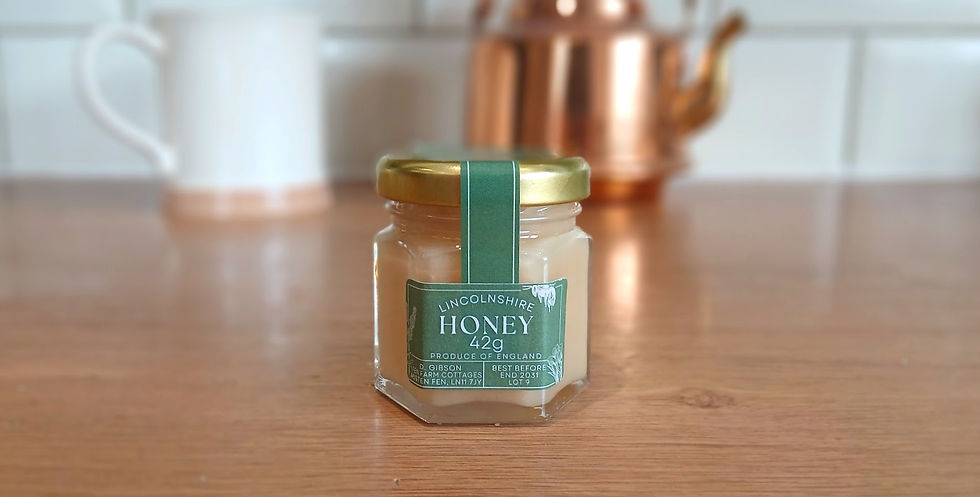
One of the biggest misconceptions about honey is that crystallisation means something has gone wrong. It doesn't. Honey is a natural product and many genuine honeys will crystallise over time. Some varieties crystallise quickly and become firm, while others can remain runny for much longer. The speed and texture of crystallisation are influenced by the floral source and the natural composition of the honey. Our spring honey, for example, can crystallise particularly quickly. Rather than being a sign that honey is fake, crystallisation is one of the natural characteristics of genuine honey. If your honey has crystallised, it hasn't gone bad. You can learn more about this in Why Does Honey Crystallise?


Look Beyond Colour
The colour of honey can range from very pale and almost transparent to deep amber and darker shades. Colour isn't a reliable test for whether honey is genuine. Different flowers produce different honeys, and even honey harvested from the same area can vary between seasons. Our Lincolnshire honey reflects the forage available to our bees at the time they are collecting nectar. This is one reason honey from different seasons can look, smell and taste quite different.
Aroma and Flavour
Real honey can have a surprisingly wide range of flavours. Depending on its floral sources, honey can have:
Floral notes
Fruity characteristics
Fresh or herbal flavours
Deeper caramel or malty notes
Subtle woody or earthy characteristics
There isn't one single flavour that “real honey” should have. The character of honey comes from the nectar collected by the bees and the combination of plants flowering around the apiary. This is part of what makes honey such an interesting natural food.


Be Wary of Homemade Honey Tests
You may have seen online tests claiming that you can identify genuine honey by:
Dropping it into water
Putting it on your thumb
Lighting it, Using a match
Checking whether ants are attracted to it
Testing how quickly it spreads
These tests are not reliable ways of proving whether honey is genuine. Honey varies naturally in moisture, viscosity, floral source and composition, so simple kitchen tests cannot provide a definitive authenticity test. If you want to know where your honey comes from, provenance and traceability are much more useful than viral home tests.
What About “Raw Honey”?
You may also see the term raw honey used on jars and websites. The term can be used in different ways, so it is worth finding out exactly what the producer means by it. Our own honey is never heat treated and is lightly filtered, allowing us to retain the natural character of the honey while removing unwanted debris from the extraction process.
You can read more about this in What Is Raw Honey?


Why Buying Local Honey Makes a Difference
When you buy honey directly from a local beekeeper, you aren't simply buying a jar of honey. You're buying a product with a known origin and supporting the beekeeping behind it. Local beekeeping helps maintain honey bee colonies in the landscape, while the bees themselves contribute to pollination as they forage. For us, producing honey is part of a much bigger relationship between our bees, the countryside and our small family business.
Our Lincolnshire Honey
Our honey is produced by our own bees in apiaries around Louth and across the Lincolnshire Wolds. Our bees forage across a mixture of countryside, including meadows, hedgerows, orchards, farmland and other flowering areas. The available forage changes throughout the year, which means the character of our honey can change with the seasons too. Our honey is lightly filtered, never heat treated, and nothing is added or taken away. That means the jar you buy has a direct connection to the bees and the Lincolnshire landscape in which they forage. To discover how nectar collected by our bees becomes honey, follow From Forage to Honey.


So, How Do You Recognise Genuine Honey?
There isn't a single kitchen test that can prove whether a jar contains genuine honey.Instead, look at the bigger picture:
Where did it come from?
Who produced it?
Can its origin be explained?
What does the label tell you?
Does the producer explain how the honey is harvested and handled?
And remember that natural variation is exactly that — natural.
Crystallisation, colour differences, changing flavour and different textures don't mean that honey is fake. Sometimes the best indication of genuine honey is simply being able to follow its story back to the beekeeper and the bees.
Learn more......


Frequently asked questions
From Understanding Honey to Your Jar
Now that you know more about what to look for in genuine honey, why not explore our own Lincolnshire honey? Our honey comes from our own bees and is available as runny, soft set and cut comb, depending on the harvest.