
From Forage to Honey
If you trace every jar of honey back far enough, it doesn’t begin in the hive.
It begins in the landscape.
Across the Lincolnshire countryside, bees move through hedgerows, orchards, wildflowers, and farmland — collecting the nectar that will eventually become honey.
Nothing happens in isolation. Every season, every field, and every blossom plays a part.

Part of the Ultimate Guide to Lincolnshire Honey
From the flowers our bees visit to the honey that reaches your jar, every harvest begins with the landscape around our hives.
This is one part of our Ultimate Guide to Lincolnshire Honey, where we follow the journey from forage to hive, harvest to jar.
What Bees Forage On
Across the seasons, our bees gather nectar and pollen from a wide mix of natural sources, including:
-
Willow
-
Blackthorn
-
Hawthorn
-
Dandelion
-
Orchard blossom
-
Oilseed rape
-
Wild hedgerows and field margins
Each flower contributes something different, and the mix of forage available to the bees helps shape the character of the honey.


How do bees make honey?
Bees make honey by collecting nectar from flowers and transforming it inside the hive.
Worker bees collect nectar using their long tongues and carry it back to the hive in a special part of their digestive system called a crop.
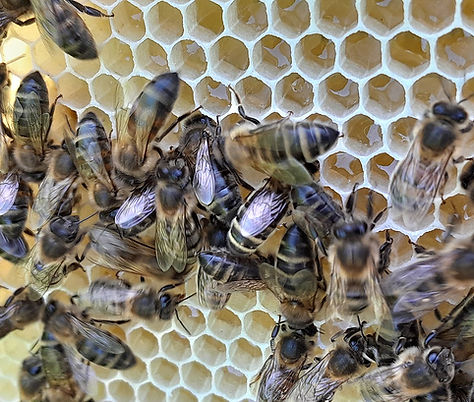
Once back at the hive, the nectar is passed between bees and natural enzymes are added. The bees then place the nectar into wax honeycomb cells, where they fan their wings to help reduce its water content.
When the honey is ready, the bees seal the cells with a thin layer of beeswax.
What began as nectar from a flower has now become honey — ready to be stored as food for the colony.
How does nectar become honey?
Nectar doesn't become honey simply because a bee collects it. The transformation continues inside the hive.
As bees pass the nectar between them, natural enzymes help change its composition. The nectar is then placed into the honeycomb, where the bees fan their wings to encourage water to evaporate.
As the moisture content reduces, the nectar becomes thicker and more stable.
When the honey is ready, the bees seal each cell with beeswax to protect what they have stored.
This is the remarkable journey from flower to honeycomb


How do bees know which flowers to visit?
Bees use their senses to find sources of nectar and pollen, and worker bees returning to the colony can help direct other foragers towards good sources of food.
What the bees forage on changes constantly. As one plant finishes flowering, another begins, so the colony adapts to what is available around the apiary.
Weather also plays an important part. Warm, settled days can provide excellent foraging conditions, while cold, wet or windy weather can limit how far the bees are able to travel.
The bees are therefore responding to a landscape that is constantly changing around them.
You can explore more information on our Understanding honey page
How does the season affect honey?
The season has a huge influence on what our bees collect and, ultimately, on the honey they produce.

Spring Forage
The season has a huge influence on what our bees collect and, ultimately, on the honey they produce.
Spring is a time of build-up and renewal.
The colony grows quickly, and early blossoms provide lighter nectar flows that shape a more delicate honey profile.
Typical spring forage includes:
-
Willow
-
Blackthorn
-
Early hedgerow blossom
-
First pollen sources of the year
This is where the season begins to take shape inside the hive.
Summer Forage
Summer brings abundance.
Hedgerows are full, farmland crops are flowering, and nectar flows are at their strongest.
During this time, bees collect from:
-
Bramble
-
Clover (where available)
-
Wildflowers
-
Field edges and crop margins
This changing mix of forage can contribute to richer and more complex flavours.
Every year is different. The weather, flowering times and availability of forage all influence what the bees are able to collect.


Hedgerows & Landscape
Bees don’t work in one fixed place — they work across a living landscape.
Hedgerows act as natural feeding routes, connecting fields, gardens, and wild spaces.
Our bees forage across the Lincolnshire landscape, including the Lincolnshire Wolds and surrounding countryside.
That means the honey they produce carries something of the place it came from.

Blossom & Nectar Sources
Different blossoms create different characteristics in honey:
-
Orchard blossom → light, floral notes
-
Hedgerow blossom → mixed, seasonal complexity
-
Field crops → stronger, more abundant nectar flows
Honey is shaped by what is available at that moment in time.


Why Location Changes Honey Taste
No two seasons are ever identical.
Because bees forage locally, the flavour of honey changes depending on what is flowering at the time.
Honey is a reflection of:
-
Season
-
Weather
-
Landscape
-
Local flora
As we often say:
Honey is a reflection of place and season.
How Nectar Becomes Honey
Once nectar is collected, the transformation begins inside the hive.
-
Bees collect nectar from flowers
-
It is passed between bees inside the hive
-
Natural enzymes begin changing the nectar
-
Water content is gradually reduced
-
The honey is stored in wax comb
-
Once ready, the bees seal the cells with wax
As the bees work the nectar, its moisture content is gradually reduced and it becomes the honey we recognise.
The finished honey is stored in the wax honeycomb the bees build inside the hive. Once the honey is ready, the bees place it into the hexagonal wax cells and seal each one with a thin layer of beeswax called a capping.
The sealed honey can then remain safely stored in the hive until the colony needs it.
At this point, nectar has become honey.
When we harvest honey, we carefully remove selected honey-filled frames while making sure our bees have enough food of their own.
This is where the journey from forage to honey begins to move from the bees' work to the beekeeper's.
Learn more in our Beekeeping Guide


Honey Is a Natural Product
Honey is a natural product, and the amount our bees produce is never something we can simply decide or manufacture.
The bees collect what the season and the landscape provide. Some years bring abundant forage and favourable weather, while other years can be more challenging. Flowering times, rainfall, temperature and the availability of nectar all influence how much honey a colony can produce.As beekeepers, we work with the bees rather than against them. Our first responsibility is always the health and wellbeing of the colony, and we only harvest honey when the bees have sufficient stores of their own.This means we don't make honey to a fixed production schedule.
We harvest what the bees naturally produce when the season allows.
Every jar is therefore a little snapshot of the season it came from — shaped by the bees, the flowers, the weather and the Lincolnshire landscape.
The bees make the honey. We simply look after it from hive to jar.
From Hive to Jar
Once harvested, honey is carefully handled to preserve its natural character:
-
Frames are removed from the hive
-
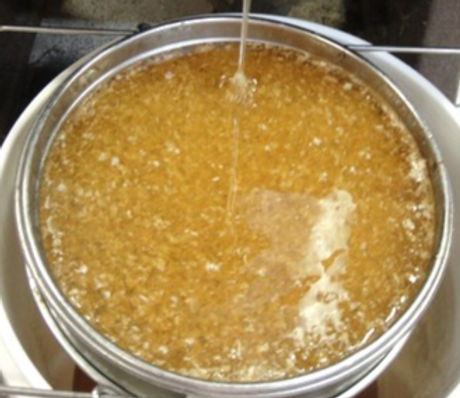
Honey is extracted
-
Lightly filtered
-
Never heat treated
-
Jars are filled and sealed
Nothing added. Nothing taken away.
To discover what happens during this part of the journey, explore our Honey Harvest & Extraction guide.
Why This Matters
Honey is not a manufactured product.
It is seasonal, local, and entirely dependent on the natural world.
Every jar reflects:
-
The work of bees
-
The flowers they have visited
-
The weather and season
-
The landscape around the apiary
-
The natural character of the harvest
From the first visit to a flower, through the hive and honeycomb, to the jar on your kitchen table, every part of the journey is connected.
From forage to honey, the landscape is part of the story.
Learn more......


Frequently asked questions
From Forage to Honey to Your Jar
The journey from flower to hive to jar is what makes every harvest special. Our Lincolnshire honey is produced from the honey our bees naturally collect across the seasons, with each harvest reflecting the forage and conditions of that year.