
Lincolnshire Wolds Honey – What Makes Local Honey Special?
Updated: Sep 28
What Makes Honey from Louth and the Lincolnshire
Wolds So Special?
When people think about honey, they often think about the bees. And rightly so.
But every jar of Lincolnshire honey tells a bigger story — one shaped by the landscape, the flowers in bloom, the changing seasons and the thousands of journeys made by honey bees across the countryside.
Here in Louth, on the edge of the Lincolnshire Wolds, our family hives are surrounded by a changing landscape of farmland, hedgerows, woodland edges, orchards, wildflowers and seasonal crops.
Our bees forage across this landscape throughout the year, gathering nectar and pollen from whatever is in flower. What they find influences the colour, flavour, texture and character of each honey harvest.
For us, that's what makes local honey from Louth and the Lincolnshire Wolds so fascinating.
No two seasons are ever quite the same, and neither is the honey.
The Landscape Around Louth


The Lincolnshire Wolds is a National Landscape, known for its rolling hills, farmland, hedgerows, woodland edges and scattered villages.For honey bees, this variety is important.
Throughout the year they forage across a changing patchwork of blossom, wildflowers, hedgerow plants, garden flowers, and agricultural crops.
Every flowering plant contributes something different.
Some provide nectar, which the bees transform into honey.
Others provide pollen, helping support the next generation of bees within the colony.
Together, they create the rich and varied forage that shapes the character of local honey.
Following the Seasons

One of the things we love most about beekeeping is watching the landscape change through the year.
In spring, the first signs of forage begin to appear. Willow, dandelions, blackthorn, fruit blossom and oilseed rape provide valuable resources for growing colonies.
As summer arrives, the landscape changes once again. Field beans, wildflowers, hedgerows, clover, bramble and lime come into bloom, providing new sources of nectar and pollen.
The bees simply adapt to what is in bloom around them.
They don't rush.
They work with the season they are in.
As beekeepers, we're often doing the same.
Find out how bees transform nectar into honey in our From Forage to Honey guide.
Why No Two Jars Are Exactly the Same
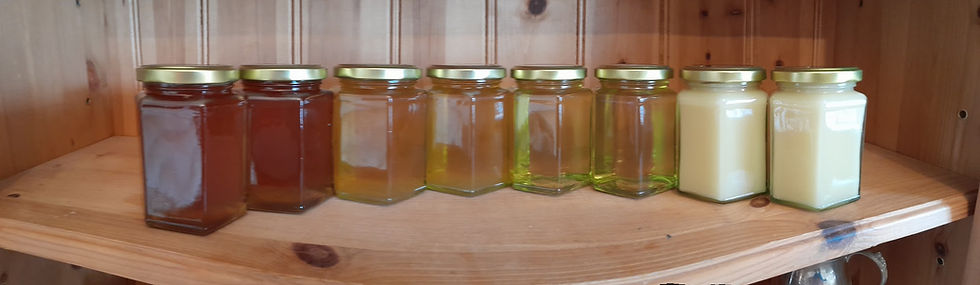
Many people are surprised to learn that honey naturally varies from one harvest to the next.
The weather, flowering conditions, rainfall, and forage available all influence the honey produced by the bees.
Some years may produce lighter honey.
Others may have a deeper colour or different flavour profile.
Even the way honey crystallises can vary.
For us, these natural differences are part of what makes local Lincolnshire honey so special.
Every jar becomes a reflection of a particular season and place.
From the Lincolnshire Wolds to Your Home

When you drizzle honey onto toast, stir it into tea, or enjoy it with yoghurt and fruit, it's easy to focus on the finished product.
But the story begins much earlier.
It begins in the hedgerows around Louth, in the blossom trees and gardens, and across the fields and wildflower areas scattered throughout the Lincolnshire countryside.
Every flight made by a worker bee contributes to that journey.
The honey in the jar is simply the final chapter.
Explore our British Lincolnshire Honey
At Stax Of Wax Ltd, our honey reflects the changing landscape around our apiaries and the seasons that shape them.
We harvest and bottle our honey with minimal processing, allowing it to retain the natural character created by the bees and the forage available throughout the year.
Our range includes runny honey, soft set honey, cut comb honey and chunk honey, all produced from our own family hives.
From spring blossom to summer forage, every harvest tells its own story.
And that's exactly how we believe honey should be.
From the Lincolnshire Wolds to your home.
From hive to home.

Freqently asked Questions
Where can I buy local honey in Louth?
You can buy our Lincolnshire honey directly from Stax Of Wax online, with local delivery available around our area. Our honey comes from our own family hives around Louth, the Lincolnshire Wolds and the surrounding Lincolnshire countryside.
What flowers do bees forage on in Lincolnshire?
Throughout the year, our bees collect nectar and pollen from a wide variety of plants, depending on what is in bloom. Early in the season this may include spring blossoms, dandelions and oilseed rape, followed by field beans, white clover, bramble, lime trees, hedgerows and many native wildflowers throughout the summer. The changing forage gives each honey harvest its own unique character.
What makes Lincolnshire honey unique?
Lincolnshire offers an incredibly varied landscape, from rolling Wolds and farmland to hedgerows, woodland and wildflower meadows. This rich mix of forage creates honey with its own distinctive flavour, colour and aroma. Because the flowers available change throughout the season, no two harvests are ever exactly the same.
Does local honey taste different?
Yes. Honey naturally reflects the flowers the bees have visited. Honey produced in different parts of the country—or even from different harvests in the same area—can vary in colour, flavour and aroma. That's one of the things that makes local, seasonal honey so special.
Where can I buy honey in Louth?
You can purchase our British honey directly through our website, or from selected local stockists when available. We also attend local events throughout the year and supply a growing number of local businesses with our honey and handmade products. Please message us to find your local stockist of our Lincolnshire Honey
Is Lincolnshire Wolds honey raw?
Our honey is raw and never heat treated. After extraction, it is lightly strained to remove larger pieces of natural wax and other debris before being jarred. Nothing is added.
Why does honey from Louth change colour each year?
Honey naturally varies from one season to the next because the bees collect nectar from different flowers as they come into bloom. Changes in weather, flowering times and local forage all influence the colour, flavour and texture of the finished honey. This natural variation is one of the signs of genuine, locally produced honey.
If you've enjoyed learning more about honey, you may also like these related pages:


Comments