fREE dELIVERY ON ORDERS OVER £60

Stax of Wax Ltd
Est 2018
British Lincolnshire Honey & Handcrafted Beeswax Products
Honey Bee Information & Beekeeping Facts


At Stax Of Wax Ltd we are not only makers of beeswax products — we are also active beekeepers in Louth, Lincolnshire. Our bees are at the heart of everything we do, from producing local honey to crafting natural beeswax candles.
Here we share some fascinating facts about bees, their role in nature, and how we can all help support these important pollinators.
Different types of bees.
There are about 200 different species of bees in the UK these are then broken down into the following three groups:
Solitary bees
Solitary bees , these bees live and survive as individuals, the female is responsible for making the nest and for collecting the food for her young, she usually dies before they emerge from their cells. She lays a single egg in a small hole or nest packed with pollen and honey, you may have seen a mining bee emerging from a hole in a brick wall, this is where she has laid an egg.
Social bees
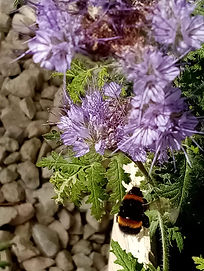
Social bees, these are the bumble bees we see in our gardens from early spring right through to the end of summer.
They live in small colonies of several hundreds, all the workers (female) and drones (male) die out at the end of the year leaving just a few mated queens to hibernate through the winter. In the spring the new queen emerges finds a small cavity, sometimes a bird box or an old mouse hole, and builds a few small cells, lays a few eggs, collects all the food (pollen and honey) and rears the young on her own and when the new bees are old enough to fly, they look after the queen and take over the role of foraging and caring for the young while the queen carrys on laying eggs etc. All the work the bumble bees do over spring and summer is just to raise a few new queens to get through winter into spring to start the cycle of life again.
Advanced social bees
Advanced social bees, these are the honey bees. The main difference between honey bees and the other types of bees is the fact they do not all die out in the winter and they do not hibernate but remain in the hive all through winter into the spring. It is for this very reason they collect nectar and pollen and make and store away honey, so they have enough food for the winter, until the flowers with pollen and nectar start again in the spring. The queen lays all the eggs for the colony (up to 2000 a day in the peak of the season) and is cared for by the worker bees, she only leaves the hive when she is young a few times to get mated, and then spends the rest of her life (up to four years) in the hive. In a typical colony of bees during the peak of the season there can be in excess of 60,000 bees within one colony.
All the workers within the colony are female, produce by a fertilised egg by the queen, these are the most populous of the colony, the males (drones) are only produced when the colony is at adequate strength, with plenty of stores (pollen and honey). The sole purpose of the drone is to mate with new queens, the do not collect pollen or nectar, nor do they look after and feed the young, they don't even have a stinger. The drone dies soon after successfully mating and come the end of autumn they are ejected from the hive to die out by the workers.
Fascinating Honey Bee Facts
Bees pollinate a third of our foods, and help other plants grow by transfering pollen between the male and female parts of the flower, for them then to produce new seeds
• Bees help pollinate around one third of the food we eat
• A worker bee lives around 5–6 weeks during summer
• Honey bees communicate using the famous waggle dance
• Bees can fly around 25 km per hour
• Their wings beat about 200 times per second
Plants and Trees That Bees Love
Trees for Bees
Some examples are:
• Apple
• Cherry
• Hawthorn
• Lime
• Maple
• Sycamore
Crops Pollinated by Bees
Some examples are:
• Pumpkins
• Raspberries
• Cucumbers
• Field beans
• Oilseed rape
Wildflowers for Bees
Some examples are:
• Cornflower
• Poppy
• Clover
• Marigold
• Lupin
• Borage
• Dandelion
How You Can Help Bees
Honeybee have beekeepers to take care of them where as social bees and solitary bees rely on themselves and the wild. Planting nectar-rich flowers is one of the simplest ways to support pollinators. Our Seeds For Lovely Bees wildflower mix is designed to help create a bee-friendly garden filled with nectar and pollen sources. You can also make a bee friendly garden, we have a page coming soon to our website on this.
Our Beekeeping & Local Honey
Our bees produce delicious Lincolnshire honey, harvested from hives located in meadows, orchards, woodland, and local crops around Louth.